Workflow Forms is a powerful tool that combines an easy-to-use online form builder with adaptable workflow automation tools, providing a seamless solution for managing various processes within an organization. I was responsible for all of the discovery and design of this transformative feature from the earliest moment to shipping multiple versions to production.
Problem
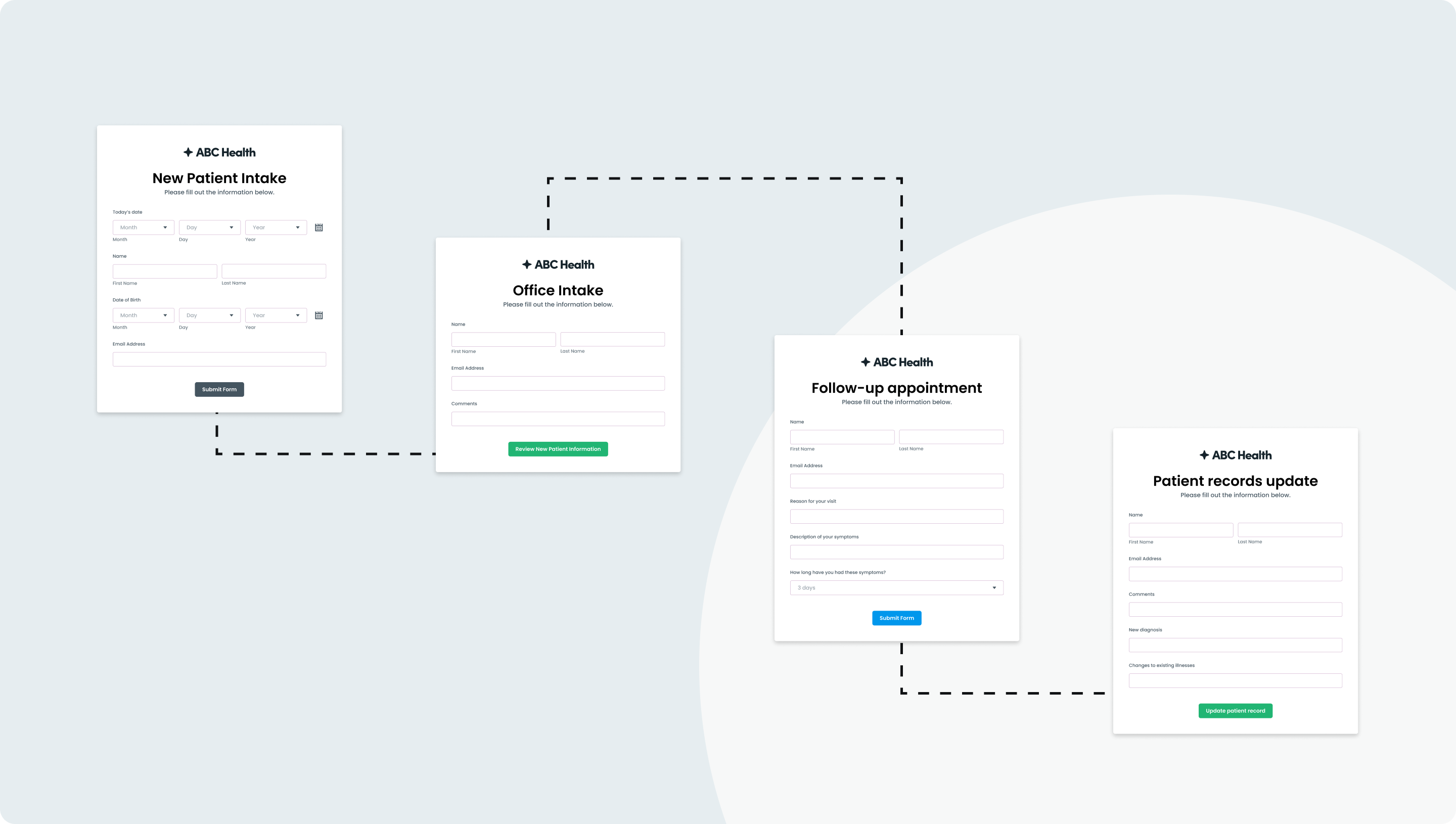
Traditionally, Formstack operated as a data capture tool where a single form was filled out by a single person, resulting in a single submission record. However, it became apparent that many business processes involve multiple stakeholders, touchpoints, and non-linear paths to completion. To address this challenge, we recognized the need to reimagine how people fill out forms and enable more complex workflow management within the Formstack product.
History
As the Lead Designer of a cross-functional engineering team, I played a pivotal role in tackling the development of Workflow Forms and transforming the Formstack product into a comprehensive solution. Our journey began with the initial concept and early customer discovery, where we identified the pressing need for enhanced workflow capabilities. We partnered with several customers across various industries, including healthcare, higher education, and financial services, to understand their needs around workflows and how the existing Formstack Form Builder could be enhanced to do so much more. Drawing upon valuable user feedback and insights, we navigated the entire product development lifecycle to deliver a fully realized, production-worthy solution.
Objectives
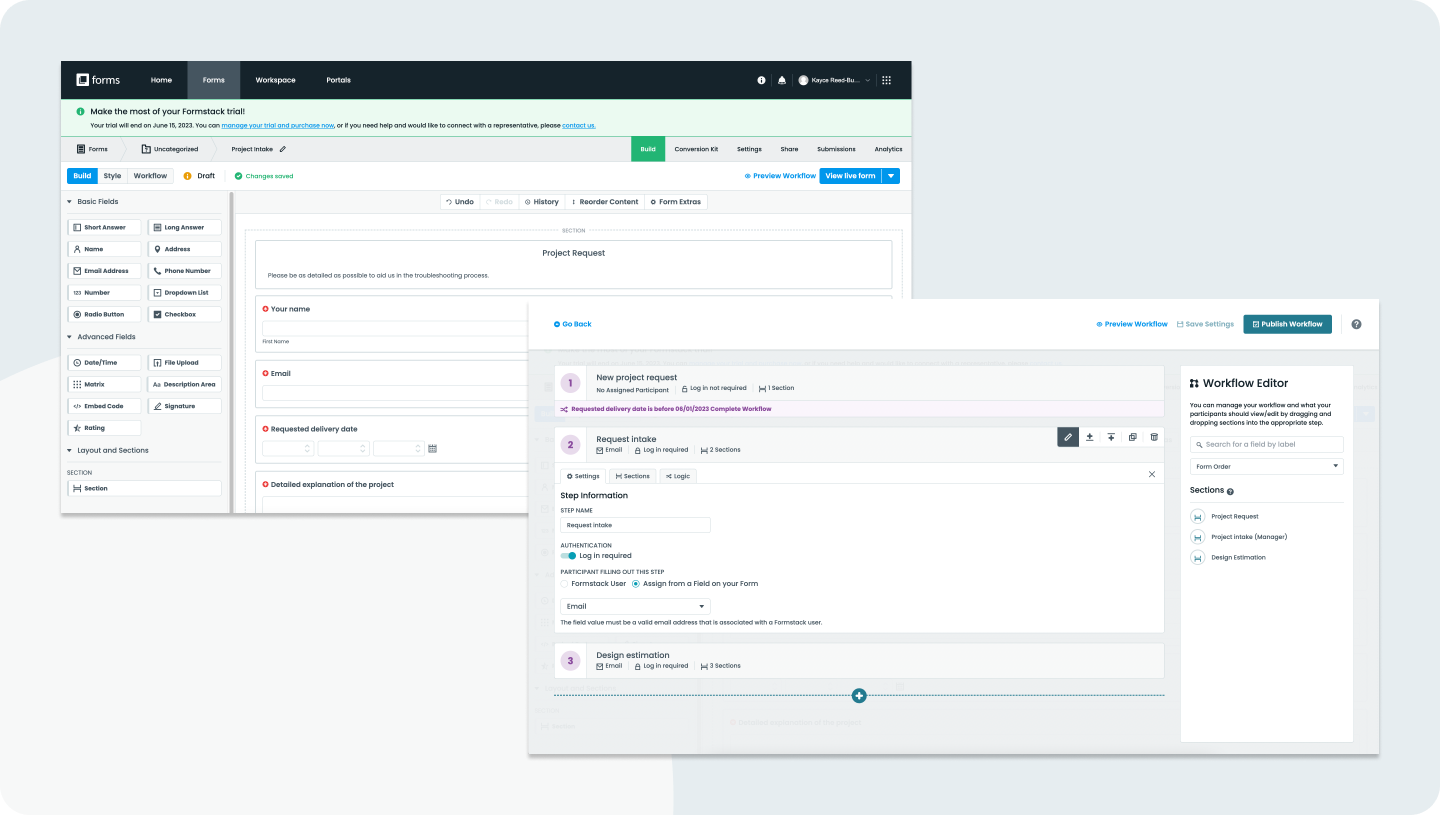
Our primary objective was to extend Formstack’s functionality beyond simple form submissions and create a seamless integration of flexible workflow automation tools. By combining the power of Formstack’s renowned online form builder with robust workflow management features, we aimed to empower organizations to streamline and manage both simple and complex business processes. We aspired to enable multiple stakeholders within an organization to collect, review, and edit submitted data on a single form, fostering collaboration and efficiency.
- Use the existing builder
- Objective: We needed to leverage existing technology in the design of this new set of workflow capabilities. This presented several UX challenges.
- Approach: To tackle this objective, our approach involved designing a new layer that seamlessly integrated with the existing form builder, incorporating advanced workflow capabilities. The key challenge was to ensure that the user interface remained clean and uncluttered, without overwhelming users with unnecessary complexity.
- Transform Formstack from a Forms company into a Workflow company
- Objective: A more ambitious objective was to transform Formstack from being solely a forms company into a comprehensive workflow company. This presented an exciting opportunity to revolutionize how users interacted with the form building product, and collaborating closely with power users allowed for innovative ideas to emerge.
- Approach: To accomplish this objective, we began by engaging in in-depth discovery sessions with customers to gather insights and feedback. Armed with this knowledge, we swiftly designed and deployed the new workflow capabilities. Throughout the process, we implemented a robust system to monitor progress, gather ongoing customer feedback, and continuously learn and improve upon our solutions. This iterative approach ensured that we delivered a product that met the evolving needs of our users.
Status
Currently, Workflow Forms are being used by organizations across different industries, effectively addressing a wide range of use cases. This significant adoption of Workflow Form capabilities has resulted in substantial revenue generation for Formstack. In fact, it stands as the highest revenue-generating add-on in their product portfolio to date. This success further underscores the value and impact that Workflow Forms brings to customers and business operations.
Team
- Kayce Reed-Buechlein, Lead Designer
- Jackie Newnam, Product Manager
- Engineering team: Brian Graham, Evan Stenmark, Paul Parker, Dana Hartweg, Greg McAlpine
* Titles above at time of primary contribution to initiative